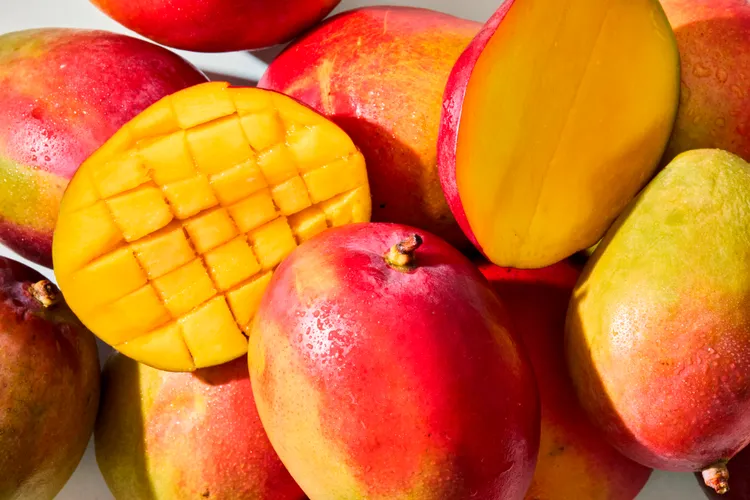
Washing fruits and vegetables before eating is a simple step that can effectively cut down on foodborne illness. But while there are some fruits you probably wash without thinking—such as berries or apples—there are others (looking at you, bananas) for whom that step might seem unnecessary. Case in point: mangoes. Since mangoes have a thick, tough skin that gets removed before eating, do you really need to wash them?
To find out, we tapped Taiyyibah Moughal, RDN, sports dietitian and founder of Empowered Beast Nutrition, and Stacy Lofton, MS, RD, of Table 12 Nutrition Consulting. Here, they’re dishing on everything you need to know about safely handling mangoes.
Should You Wash a Mango Before Eating?
Lofton and Moughal both agree that you should always wash a mango before eating. As Moughal notes, produce can pick up residue or bacteria such as Salmonella at many points before it ever reaches your plate. “Contamination can happen during growing from soil, water, animal contact, or poor hygiene, and it can also happen after harvest through handling, storage, or food preparation,” she says. “Washing is a simple step that takes less than a minute, and it helps reduce what is sitting on that surface before you cut into it. It’s one of those small habits that quietly does a lot.”
What About If the Mango Is Peeled?
Since you typically peel a mango before eating it, you can probably skip washing—right? Turns out, that’s a common misconception. “The moment your knife cuts through that unwashed skin, anything sitting on the outside gets carried straight into the fruit you’re about to eat,” Moughal says. “Think of your knife as a tiny conveyor belt moving whatever is on the outside right into the juicy flesh. Washing fresh fruits and vegetables before cutting is a proven way to remove germs and unwanted residues from the surface, and with mangoes, that simple step makes all the difference.”
Just because you aren’t eating the skin doesn’t mean that dirt, bacteria, and other residue won’t make it onto the part of the mango that you’re actually eating. Lofton says that bacteria on the outside of the mango can travel into the flesh through your knife, cutting board, or hands during prep, and a quick rinse is a simple step that matters more than you might realize. “Even though the skin isn’t eaten, it can carry dirt and bacteria picked up during handling and transport,” she says. “When you cut into a mango, your knife transfers whatever is on the surface directly into the flesh.”
Moughal notes that this is especially important advice to keep in mind for people at higher risk for foodborne illness, including young children, older adults, pregnant people, and anyone with a weakened immune system. “For those groups in particular, that 30-second wash is genuinely worth it every time,” she says.
Never Lose a Recipe Again! With MyRecipes, your personal home for recipes, you can easily save and organize your favorite BHG recipes, plus thousands more, in one convenient place.
How to Wash a Mango
Now that you know you should always wash a mango before peeling, you might be wondering the best way to do so. Luckily, it’s extremely simple. Lofton and Moughal recommend following these steps:
- Rinse the mango under cool, running water.
- Gently rub the skin of the mango with your hands or a produce brush.
- Pat dry with a clean towel before cutting.
Water is all you need here—you can skip the soap and produce sprays. “Rinsing alone helps, but adding light friction improves removal, particularly on textured areas of the skin,” Lofton says. That said, Moughal says a produce brush can be helpful if there is visible dirt or residue on the skin of the mango—she advises to think of it the way you would scrub a potato.
Other Food Safety Tips for Handling Mangoes
Washing a mango before peeling is an important step you should always make time for. Here are the other food safety tips Lofton and Moughal say to keep in mind:
- Wash your hands, knife, and cutting board before slicing.
- Use a clean knife and cutting board.
- Keep fresh produce, such as mangoes, away from raw meat and seafood.
- Avoid placing cut mango back on any surface that has touched the unwashed fruit.
- Avoid soaking mangoes in standing water, which can spread rather than remove contamination.
- Refrigerate cut mango within two hours and use within a few days. Once cut, bacteria multiply more quickly, especially if the fruit sits at room temperature.
- If the mango looks moldy, smells off, or has a slimy texture once cut, throw it out.
Want to learn more about optimizing your nutrition for performance or weight management? Follow along for evidence-based insights tailored to athletes and active individuals.